What is BS 5266?
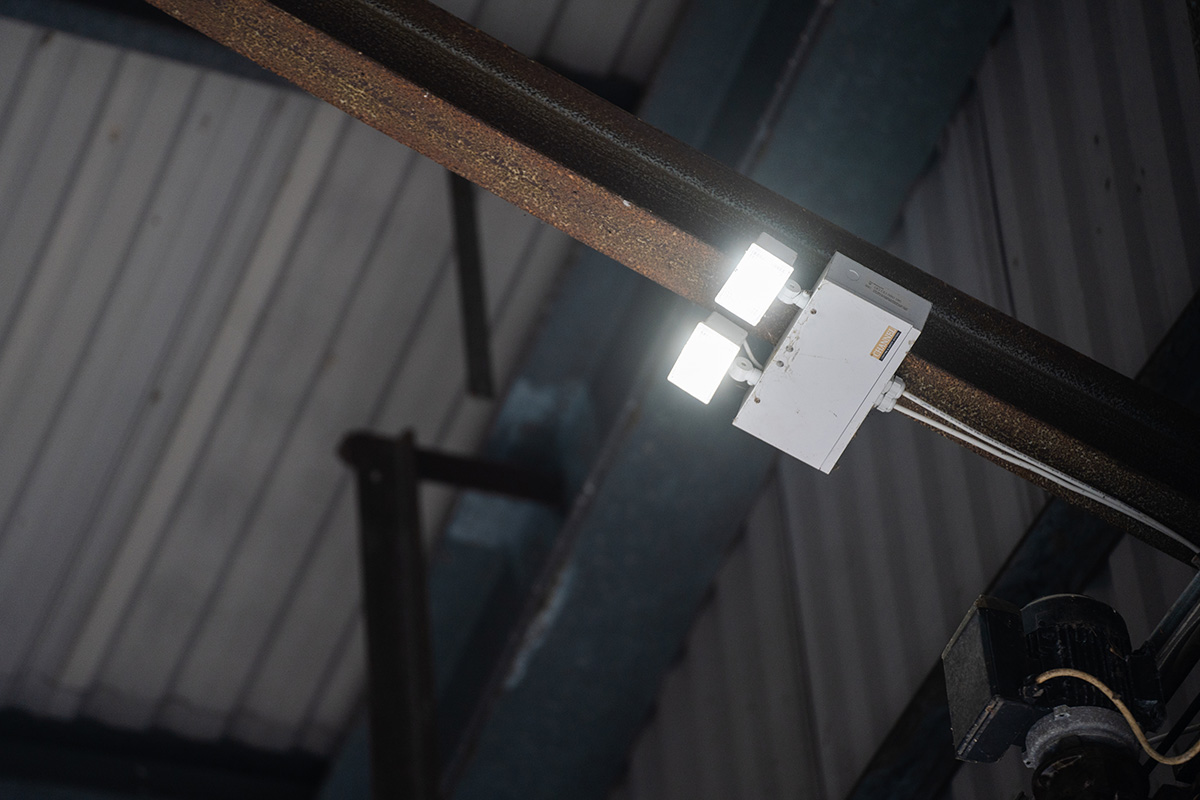
BS 5266 is the British Standard for emergency lighting. It sets out the requirements for how emergency lighting systems should be designed, installed, and maintained across UK buildings.
Recent amendments have expanded the scope of the standard and introduced new technical requirements. If you are responsible for a building with an emergency lighting system, here is what you need to know.
The amendments cover a range of updates, but the changes most likely to affect building owners and managers are set out below.
What has changed?
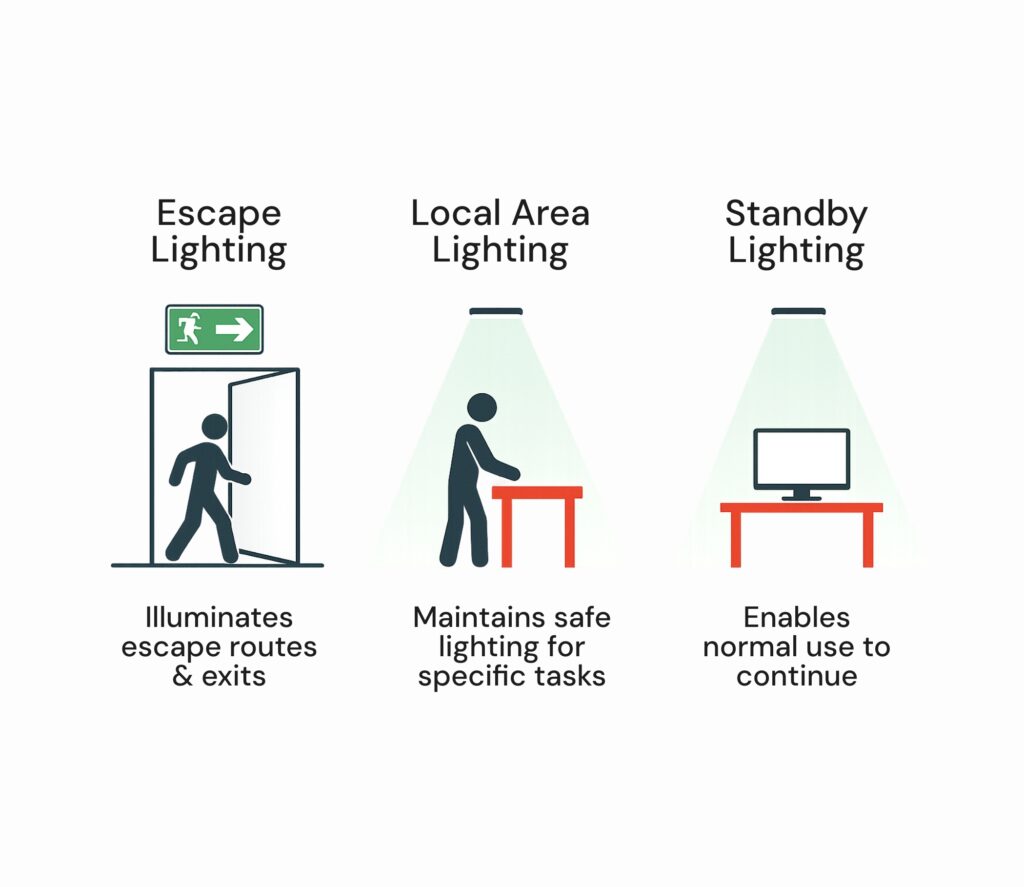
BS 5266 previously covered escape lighting only - illuminating escape routes and exits during a power failure.
The amended standard now also includes local area lighting, which maintains safe conditions for specific tasks, and standby lighting, which enables normal use to continue during an outage.
Wiring resilience
High risk areas must now be supplied from at least two separate circuits, and no more than 20 luminaires may be lost from a single circuit fault.
This limits the impact of any one failure on the overall system.
Photometric verification
Photometric verification - a measurement of lux levels across the building - is now required every five years. These readings must be taken against the original design documentation.
Where this is not available, measurements must be checked against current standards.
If the required lux levels are not met, the findings are recorded and a recommendation is made to the responsible person.
Updated illuminance and coverage
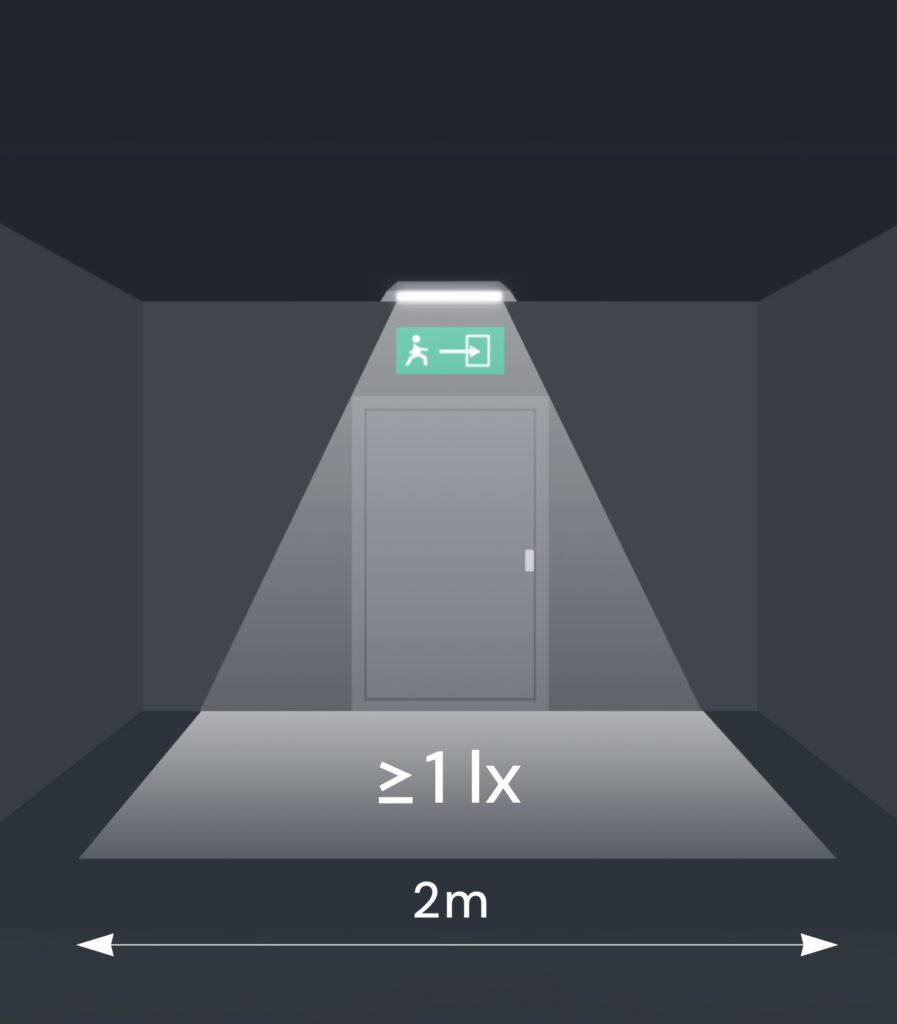
The standard now requires 1 lux across the full width of an escape route, rather than along the centre line only. This ensures more consistent lighting coverage in the event of an emergency.
Borrowed light
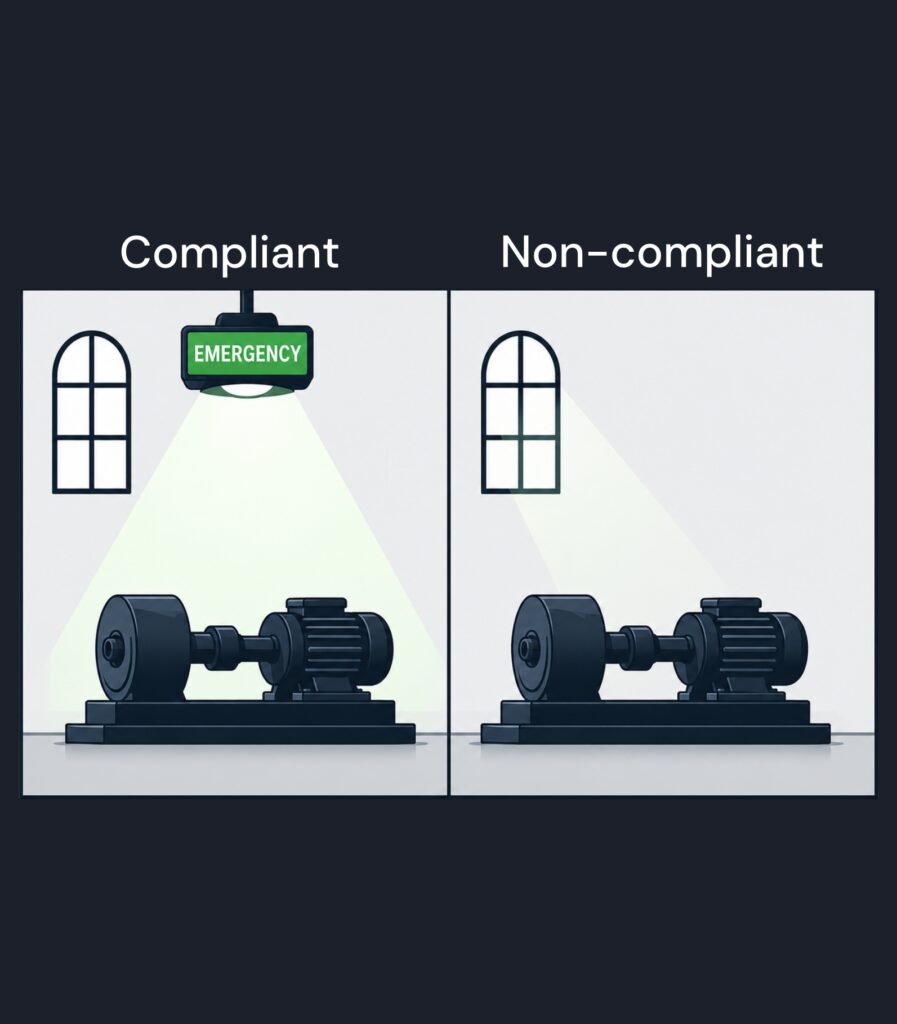
Borrowed light - natural or ambient light that supplements emergency lighting - is now excluded from BS 5266.
Dedicated emergency luminaires must be provided in all areas requiring emergency lighting, regardless of any other light sources present.
Get in touch to schedule works
As the owner or overseer of a building, it is your responsibility to commission upgrades and works required when standards change.
To discuss adding your upgrades to our upcoming schedule of works, please get in touch.
